
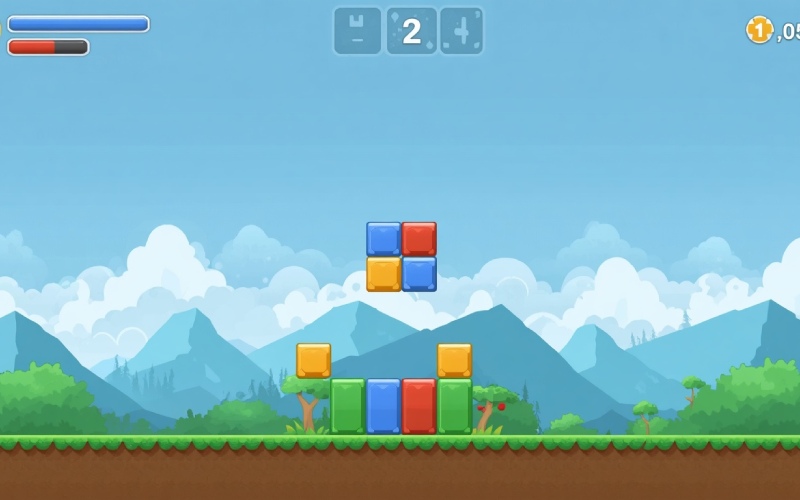
Google Block Breaker is a browser-game search term associated with the classic brick-breaking genre. These games bring simple arcade entertainment to modern devices, allowing players to control a paddle, bounce a ball, and clear blocks from the screen.
The appeal is easy to understand: the rules are simple, rounds can be short, and the challenge increases as players try to keep the ball in play. However, the exact game available through a Google search can vary, so it is worth checking the game’s title and source before assuming it is an official Google product.
This guide explains how block-breaker games work, how to find a version to play, which controls to try, and how to improve your performance.
What Is Google Block Breaker?
Google Block Breaker generally refers to searches for an online brick-breaking game that can be played in a web browser. The gameplay follows a familiar arcade formula: a ball moves around the play area, a paddle keeps it from falling, and blocks disappear when the ball hits them.
The concept is closely related to Atari’s classic Breakout, released in 1976. The original game helped establish a format that inspired many later arcade, computer, and mobile games.
It is important to distinguish between games that appear in Google search results and games officially created or hosted by Google. Search results may include third-party websites, browser games, and other interactive experiences. Check the source before assuming that a particular version is an official Google game.
Why Do People Enjoy Block-Breaking Games?
Block-breaker games remain popular because they combine straightforward controls with a challenge that rewards practice.
- Simple rules: Players can learn the basic objective in moments.
- Quick sessions: A round can fit into a short break.
- Increasing challenge: Faster ball movement and different block layouts can test reaction time.
- Strategic play: Players can aim for specific angles instead of relying on random bounces.
- Nostalgic appeal: The gameplay recalls classic arcade experiences.
The combination of accessible controls and progressively demanding play makes the genre suitable for beginners and experienced arcade fans.
How to Access and Play Google Block Breaker
The exact steps depend on which version you find. Use the following process to locate and start a browser-based block-breaker game.
- Open a web browser on your computer, tablet, or phone.
- Search Google for “Block Breaker” or “brick breaker game.”
- Review the results and select a suitable game from a trustworthy website.
- Read any instructions shown on the game’s opening screen.
- Select the play or start option if one is available.
- Learn the controls before beginning a longer round.
Not every search result will open an interactive game directly on the Google results page. Some results lead to external websites, and their features, advertisements, and controls may differ.
Is Google Block Breaker Free?
Many browser-based brick-breaking games are available without an upfront payment. However, pricing, advertisements, optional purchases, and other restrictions depend on the individual game and its provider.
Check the website’s information before playing, especially if it asks you to install software, create an account, or provide personal or payment details for a game that should otherwise be simple to access.
Understanding the Basic Gameplay
Most traditional block-breaker games use three main elements: a paddle, a bouncing ball, and a wall or arrangement of blocks.
1. Control the Paddle
Move the paddle horizontally along the bottom of the screen. Its purpose is to intercept the ball before it leaves the play area.
Good paddle control is more important than making large, sudden movements. Follow the ball’s direction and position the paddle where it is expected to land.
2. Bounce the Ball
When the ball reaches the paddle, it bounces back into the play area. The angle of the rebound often depends on where the ball contacts the paddle, although the precise physics vary by game.
Learning how your chosen version handles rebounds can help you aim more deliberately.
3. Break the Blocks
The primary objective is to hit the blocks with the ball. Depending on the game’s rules, some blocks may disappear after one hit, while others may require multiple hits.
Clearing the blocks usually advances the player toward the next stage or completes the round. The exact scoring and level system depends on the version being played.
4. Keep the Ball in Play
If the ball passes the paddle and leaves the active play area, the game may deduct a life or end the round. Watch the ball’s trajectory and prepare for its return instead of waiting until the last moment.
Controls for Desktop and Mobile
Controls vary between browser games, so always check the instructions displayed by the version you choose.
| Device | Possible Controls | Practical Tip |
| Desktop or laptop | Left and right arrow keys | Make small, controlled movements |
| Desktop or laptop | Mouse movement, if supported | Keep the pointer aligned with the paddle |
| Smartphone | Touch or drag gestures, if supported | Follow the ball without making abrupt movements |
| Tablet | Touch controls or keyboard, depending on the game | Choose the method that offers the best control |
These are common control options for the genre, not a guarantee that every game supports all of them.
If the paddle does not respond, check the game’s instructions, click inside the play area if necessary, and confirm that the browser has not scrolled away from the game.
Winning Strategies to Improve Your Score
You do not need complicated techniques to become better at block-breaker games. A few practical habits can make a noticeable difference.
Watch the Ball’s Trajectory
Pay attention to the direction and speed of the ball. After it bounces off a wall or block, estimate where it will return to the paddle.
Predicting the landing point gives you more time to react and reduces unnecessary movement.
Learn to Use Paddle Angles
In many block-breaker games, the point of contact between the ball and paddle affects the rebound angle.
A central hit may produce a more direct rebound, while a hit closer to an edge may send the ball toward one side. The precise effect depends on the game’s physics.
Experiment with controlled shots to learn how your chosen version behaves.
Aim for Openings in the Blocks
When the ball creates a gap in the block formation, try directing it through that opening. In some games, reaching the area behind the remaining blocks can let the ball hit several blocks before returning to the paddle.
This approach can be more efficient than repeatedly striking the same front-facing blocks.
Keep Your Movements Smooth
Large, frantic movements make it harder to position the paddle accurately. Use small adjustments and keep watching the ball.
Smooth control is particularly useful when the ball begins moving faster or changes direction frequently.
Understand the Game’s Special Features
Some brick-breaking games include power-ups, multiple balls, stronger blocks, or other special mechanics. Others use a simpler design without these features.
Read the instructions for the game you are playing rather than assuming that every version has the same abilities or scoring rules.
Practise Consistently
Short practice sessions can help you become familiar with the ball’s movement and the paddle’s response. Focus on keeping the ball in play first, then work on aiming for difficult blocks.
If the game offers a score or level counter, use it to track your own progress.
Google Block Breaker vs. Classic Atari Breakout
Google Block Breaker searches are often associated with the wider brick-breaking genre, while Atari’s Breakout is a specific classic arcade game.
| Feature | Classic Atari Breakout | Browser-Based Block-Breaker Games |
| Original release | 1976 | Varies by game |
| Core objective | Bounce a ball to clear blocks | Usually the same basic objective |
| Controls | Paddle control | Keyboard, mouse, or touch, depending on the game |
| Visual style | Classic arcade presentation | Varies from retro graphics to modern designs |
| Levels and scoring | Defined by the original game’s rules | Determined by each game’s design |
| Availability | Depends on the platform or edition | Often accessible through a browser |
| Extra features | Depends on the edition | May include power-ups or additional mechanics |
The central idea remains similar across many versions, but the graphics, controls, scoring, and progression systems are not necessarily identical.
Why Block-Breaker Games Remain Popular
Block-breaking games offer a simple challenge that is easy to understand without requiring a long tutorial. Players can start quickly and improve through practice.
Their short-round format also makes them convenient for casual entertainment. Unlike games built around long storylines or complex progression systems, a traditional block-breaker can focus almost entirely on movement, timing, and accuracy.
The genre also has a strong connection to arcade history. Players who remember early video games can enjoy familiar mechanics, while new players can discover the format without needing to learn complicated rules.
Although some people find casual games relaxing, the experience differs from person to person. A short game can be an enjoyable break, but it should not be presented as a guaranteed treatment for stress or a proven way to improve cognitive ability.
Is Google Block Breaker Safe to Play?
A browser game from a reputable source is generally easier to evaluate than an unfamiliar download, but the safety of an individual website still matters.
Keep these precautions in mind:
- Prefer reputable websites and official game pages.
- Avoid downloading unknown files just to play a simple browser game.
- Do not provide passwords, payment information, or unnecessary personal details.
- Be cautious of misleading download buttons and unexpected pop-ups.
- Check the website address before opening a game.
- If a page requests unusual permissions, consider leaving the site.
Google search results can include third-party websites, so appearing in search does not automatically mean that Google operates or endorses a game.
Frequently Asked Questions
How do I play Google Block Breaker?
Search Google for “Block Breaker” or “brick breaker game,” choose a suitable result, and follow the game’s on-screen instructions. Availability and controls depend on the version you open.
Is Google Block Breaker an official Google game?
The name alone does not establish that a game is official. Search results may include third-party browser games and other versions of the brick-breaking genre. Check the source and publisher before attributing a game to Google.
Can I play Block Breaker on my phone?
Many browser-based block-breaker games support smartphones, but mobile compatibility varies. Look for touch or drag controls in the game’s instructions.
Can I play Block Breaker on a computer?
Yes, many versions are designed for desktop browsers. Depending on the game, you may be able to control the paddle with arrow keys or a mouse.
Does Google Block Breaker cost money?
Some browser games are free to play, while others may display advertisements or offer optional purchases. Check the specific game’s terms and features.
How do I get a higher score in Block Breaker?
Focus on predicting the ball’s path, controlling the paddle smoothly, and directing the ball toward useful openings in the blocks. Learn the rebound physics of your chosen game and practise regularly.
Does Block Breaker save my progress?
That depends on the version. Some games may preserve scores or progress, while others reset when you leave. Check the game’s own instructions rather than assuming all versions work the same way.
Is Block Breaker similar to Atari Breakout?
Yes. Many block-breaker games use the same basic concept as Atari’s Breakout: bounce a ball with a paddle to remove blocks. Later versions may add new graphics, levels, controls, and other mechanics.
Conclusion
Google Block Breaker is a popular search term for people looking to enjoy the familiar challenge of a brick-breaking arcade game. The basic formula remains straightforward: control a paddle, keep the ball in play, and clear the blocks through timing and accurate movement.
The best way to get started is to choose a trustworthy browser game, learn its controls, and practise predicting where the ball will land. As your timing improves, you can experiment with rebound angles and more deliberate shots.
Remember that the exact features, scoring system, and availability depend on the game you choose. Checking the source and instructions helps ensure that you know what to expect before playing.



