
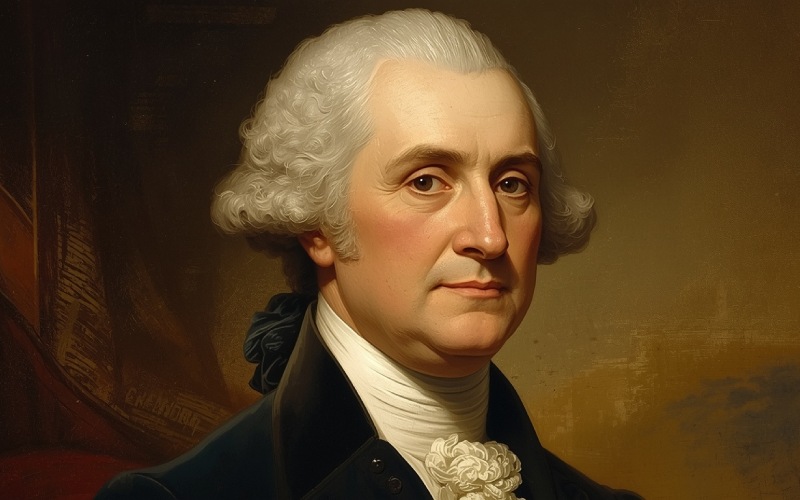
The George Washington haircut is one of the most recognizable hairstyles in American history. His powdered white hair, curled sides and tied-back queue have become almost inseparable from the image of the nation’s first president.
But there is a common misconception surrounding Washington’s appearance: Did George Washington actually wear a wig?
The answer is more interesting than many people realize. Washington generally did not wear a wig. Instead, he grew his own hair long, styled it in the fashion of the 18th century, and regularly powdered it to achieve the pale appearance seen in famous portraits.
Here’s a closer look at George Washington’s real hairstyle, how he maintained it and why the look remains so recognizable today.
Did George Washington Wear a Wig?
One of the most persistent myths about Washington is that his famous white hair was a wig.
Wigs were extremely fashionable among wealthy and influential men during the 18th century. Because Washington is frequently depicted with perfectly styled white hair, it’s easy to assume that he wore one.
Historical evidence, however, indicates that Washington’s hair was his own.
Rather than covering his head with a wig, he grew his hair long and styled it according to contemporary fashion.
He did use hair powder, which gave his naturally darker hair the familiar light or white appearance associated with his portraits.
George Washington Without a Wig
Washington’s decision to use his natural hair makes his famous appearance somewhat different from the popular image.
His hair was naturally a reddish-brown color rather than white.
The white appearance came largely from hair powder, a common grooming practice during the period.
Washington’s hairstyle was therefore a combination of:
- Naturally grown long hair
- Curled sections at the sides
- A tied-back queue
- White or light-colored hair powder
This styling helped him maintain the formal appearance expected of an influential gentleman of his era.
Why Did George Washington Style His Hair This Way?
Washington wasn’t trying to create a completely unique hairstyle.
He was following the fashion of his time.
Long, powdered and carefully arranged hair was associated with respectable formal dress during the 18th century. For someone who regularly appeared in military, political and diplomatic settings, maintaining an appropriate appearance was important.
His hairstyle helped communicate formality and dignity.
Fashion and Social Status
Hair and clothing played a significant role in 18th-century society.
A carefully maintained hairstyle could communicate:
- Respectability
- Wealth
- Professional status
- Formality
- Social position
Washington’s appearance therefore reflected the culture in which he lived rather than simply being a personal fashion statement.
How Did George Washington Create His Famous Curls?
The hairstyle seen in portraits required considerably more effort than a modern haircut.
Washington’s hair was kept long and arranged carefully.
Step 1: Growing the Hair
Washington allowed his natural hair to grow long, with enough length to reach the sides and back of his head.
Step 2: Curling the Sides
The hair around the sides was arranged into curls. Hair irons or heated tongs were among the styling tools used during the period.
Step 3: Creating the Queue
The longer hair at the back was gathered together and tied into a queue.
A ribbon or similar accessory could be used to secure the hair.
Step 4: Applying Hair Powder
Powder was applied to the hair to produce the pale appearance associated with fashionable men’s hairstyles of the period.
The finished style was formal, controlled and distinctly 18th-century.
Why Are George Washington’s Curls So Famous?
The curled hairstyle became an important part of Washington’s visual identity.
Portraits and later historical representations repeatedly showed him with the same general appearance. As a result, generations of Americans became familiar with the combination of:
powdered hair + side curls + tied-back queue.
Eventually, the hairstyle became almost as recognizable as Washington’s face.
George Washington’s Natural Hair Color
Although Washington is commonly imagined with bright white hair, his natural hair was not white.
Historical descriptions and surviving portraits indicate that his hair was reddish-brown or auburn.
The powdered appearance changed how his hair looked in formal settings.
This is an important detail because it helps explain why modern images of Washington can be misleading. When people see a white-haired Washington on currency, paintings or statues, they may assume his hair was naturally that color.
What Did George Washington Look Like Without Hair Powder?
Without powder, Washington would have looked significantly different from the familiar presidential image.
His natural hair was darker, and without the formal powdering and styling, his appearance would have been much less similar to the iconic portraits.
However, the famous powdered style was part of how Washington presented himself publicly.
It wasn’t simply a costume. It reflected the grooming standards of his time.
The Role of Portraits in Washington’s Image
Portraits played an important role in shaping how Americans remember Washington.
Artists often presented political leaders in formal clothing with carefully arranged hair and dignified expressions.
These portraits weren’t ordinary snapshots. They were carefully composed representations designed to communicate status and character.
As a result, Washington’s polished appearance became permanently associated with his historical identity.
Why People Think George Washington Wore a Wig
The wig misconception is understandable.
During Washington’s lifetime, wigs were common among members of the upper classes and professional communities.
His powdered hairstyle also looked similar to the wig styles popular during the same period.
Because modern audiences often associate 18th-century powdered hair with wigs, the distinction can easily be lost.
But Washington’s famous hairstyle was generally achieved using his natural hair.
George Washington Hair Wig in Modern Costumes
Today, actors, students and historical reenactors frequently wear George Washington hair wigs.
These wigs recreate the familiar historical appearance without requiring someone to grow and style their own hair.
Modern versions typically feature:
- Side curls
- A long back section
- A tied queue
- Light or powdered coloring
- An 18th-century appearance
Although these are modern reproductions, they are based on the hairstyle associated with Washington.
George Washington Haircut in Popular Culture
Washington’s hairstyle has become a cultural symbol.
You can see versions of it in:
- Historical films
- Theater productions
- School performances
- Museums
- Historical reenactments
- Halloween costumes
- Political cartoons
- Internet memes
The hairstyle is so recognizable that even a simple silhouette of the curled sides and tied-back hair can immediately suggest George Washington.
George Washington Haircut as a Historical Symbol
The hairstyle represents more than fashion.
Washington lived during a period when personal presentation was closely connected with leadership and social expectations.
His carefully maintained appearance helped reinforce the image of a disciplined and respectable statesman.
For modern audiences, the hairstyle has become shorthand for America’s founding era.
Can You Recreate the George Washington Hairstyle Today?
Yes. Recreating the look is relatively straightforward with modern tools.
For a historically inspired appearance, you would need:
- Long enough hair to create the side curls.
- Curling tools or rollers.
- A method of tying the back into a queue.
- A ribbon or similar accessory.
- Temporary hair powder if you want the traditional powdered appearance.
For costumes or reenactments, a pre-styled historical wig is usually the easiest option.
George Washington Hairstyle for Reenactors
Historical reenactors often try to reproduce period hairstyles as accurately as possible.
For a Washington-inspired look, the important visual elements are the curled sides and tied-back hair rather than simply wearing a generic white wig.
The goal is to recreate the overall style associated with late-18th-century formal men’s fashion.
Was Washington’s Hairstyle Practical?
By modern standards, the hairstyle required significant maintenance.
Long hair had to be arranged carefully, curls needed to be maintained, and powder had to be applied.
However, these practices were normal for fashionable men of Washington’s era.
What seems elaborate today was simply part of formal grooming at the time.
George Washington Haircut: Pros and Cons
Pros
- Historically recognizable: The style immediately evokes Washington and the founding era.
- Distinctive: Few modern hairstyles look similar.
- Useful for reenactments: It can add authenticity to historical presentations.
- Educational: Recreating the hairstyle can help people understand 18th-century fashion.
Cons
- High maintenance: The historical style required considerable grooming.
- Time-consuming: Creating curls and arranging long hair takes effort.
- Not practical for everyone: The full style is difficult to maintain as an everyday haircut.
- Modern misunderstanding: Some people may assume the historical hairstyle was simply a wig.
George Washington Haircut in Modern Media
Washington’s distinctive hairstyle continues to appear in movies, television, documentaries and educational content.
It is particularly useful in visual storytelling because viewers can identify the historical figure immediately.
Even when an actor doesn’t perfectly reproduce the original hairstyle, the combination of powdered hair, curls and a tied queue is usually enough to signal Washington.
Frequently Asked Questions
Did George Washington really wear a wig?
No. George Washington generally wore his own natural hair rather than a wig. He grew it long, styled it and used hair powder to achieve the fashionable appearance of the period.
What color was George Washington’s natural hair?
Washington’s natural hair was reddish-brown or auburn rather than naturally white.
Why did George Washington’s hair look white?
Hair powder was responsible for much of the pale appearance associated with his formal hairstyle.
How did George Washington create his curls?
His hair was styled into curls at the sides using period grooming techniques and tools, while the longer hair at the back was gathered into a queue.
Did George Washington have long hair?
Yes. He kept his hair long enough to create the formal style that became associated with him.
Can you recreate the George Washington haircut today?
Yes. Modern curling tools, styling products and historical wigs make it relatively easy to recreate the look for costumes, reenactments or educational events.
Why do people think Washington wore a wig?
Because wigs were common during his era and his powdered, curled hairstyle closely resembled popular wig styles. Modern representations have also reinforced the assumption.
The George Washington Haircut Today
Although few people would choose Washington’s complete 18th-century hairstyle as an everyday look today, parts of the style remain recognizable.
Long curls, tied-back hair and period-inspired styling occasionally appear in historical fashion and costume events.
More importantly, the hairstyle continues to serve as a visual connection to America’s founding period.
Conclusion
The George Washington haircut is more than an old-fashioned hairstyle. It is an important part of the visual image associated with America’s first president.
Contrary to the popular misconception, Washington generally did not rely on a wig to create his famous appearance. He grew his own hair long, arranged it into curls and a queue, and used powder to achieve the fashionable light-colored look of the 18th century.
Today, that hairstyle remains instantly recognizable in portraits, reenactments, costumes and popular culture.
Understanding the real story behind Washington’s hair also offers a useful reminder that historical figures often looked different from the simplified images we inherit. The familiar white-haired Washington was not simply a man wearing a wig—he was following the grooming and fashion traditions of his own time.



