
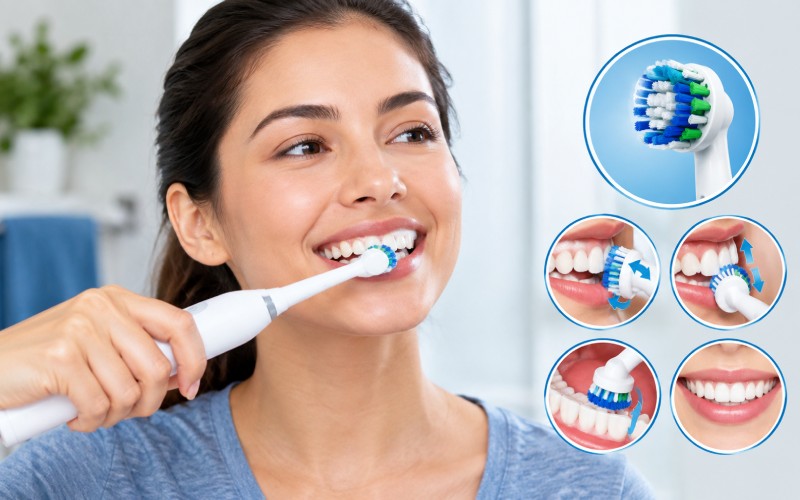
Switching from a manual toothbrush to an electric toothbrush can make your daily oral-care routine easier, but using the correct technique still matters. An electric toothbrush does much of the brushing movement for you, so the goal is not to scrub harder. Instead, focus on gentle pressure, proper positioning, and giving every area of your mouth enough attention.
With a little practice, using an electric toothbrush can become a simple and consistent part of your oral hygiene routine.
Brushing Technique With an Electric Toothbrush
So, what is the best brushing technique with an electric toothbrush?
Start by placing the brush head against your teeth near the gum line. Let the powered bristles perform the brushing action rather than making large back-and-forth movements yourself.
Move slowly from one tooth or small group of teeth to the next, making sure the brush reaches the front, back, and chewing surfaces of your teeth.
Pay particular attention to the gum line, where plaque can accumulate. Use gentle pressure and allow the toothbrush to do most of the work.
Most dental professionals recommend brushing for approximately two minutes twice a day with fluoride toothpaste. If your toothbrush has a built-in timer, use it to help divide your brushing time evenly across your mouth.
How to Hold an Electric Toothbrush
Holding an electric toothbrush correctly is important for comfortable and effective cleaning.
Use a relaxed grip rather than tightly squeezing the handle. Place the brush head against your teeth and gums gently, without pressing aggressively.
Many modern electric toothbrushes include pressure sensors that alert you when you are applying too much force. If your model has this feature, use it as a guide to develop a lighter brushing technique.
Remember that electric toothbrushes are designed to provide the brushing movement themselves. Excessive manual scrubbing is unnecessary and may irritate your gums.
Step-by-Step Electric Toothbrushing Technique
A simple routine can make it easier to clean your entire mouth consistently.
1. Apply Fluoride Toothpaste
Place a small amount of fluoride toothpaste on the brush head. Avoid using excessive toothpaste.
2. Start at the Gum Line
Position the bristles so they gently reach the area where your teeth meet your gums.
3. Move Slowly Around Your Mouth
Rather than rapidly moving the brush back and forth, guide it gradually from one section to another.
4. Clean Every Surface
Brush the outer, inner, and chewing surfaces of your teeth. Make sure you do not consistently skip the teeth at the back of your mouth.
5. Use Gentle Pressure
There is no need to press hard. If the toothbrush has a pressure sensor, pay attention to its warning signal.
6. Brush for Two Minutes
Divide your time between the different sections of your mouth so that each area receives adequate attention.
7. Clean the Brush Head
After brushing, rinse the brush head thoroughly and allow it to dry according to the manufacturer’s recommendations.
Tips for Effective Electric Toothbrushing
Follow these simple habits to get more from your electric toothbrush:
- Brush for about two minutes: A built-in timer can help you maintain a consistent brushing routine.
- Avoid excessive pressure: Pressing too hard can irritate the gums and contribute to tooth wear.
- Replace the brush head when needed: Follow the manufacturer’s replacement guidance, especially when the bristles become worn or damaged.
- Brush twice a day: Consistency is one of the most important parts of good oral hygiene.
- Reach every surface: Pay attention to the inner, outer, and chewing surfaces of your teeth.
- Keep the brush clean: Rinse the brush head after use and store it appropriately.
- Use the right mode: If your toothbrush offers a sensitive or gentle setting and it feels more comfortable, consider using it.
Benefits of Using an Electric Toothbrush
Electric toothbrushes can offer several advantages over manual brushing. Research has found that powered toothbrushes can be effective at reducing plaque and gingivitis when used properly and consistently.
They can also be useful for people who have difficulty making the repeated brushing movements required with a manual toothbrush.
Many electric toothbrushes include features designed to improve brushing habits, including:
- Two-minute timers
- Pressure sensors
- Different brushing modes
- Automatic pacing
- Rechargeable batteries
- Replaceable brush heads
These features can make it easier to develop a consistent routine and avoid common brushing mistakes.
However, an electric toothbrush is not a substitute for good overall oral care. Daily flossing or another appropriate interdental-cleaning method, regular dental checkups, and a balanced oral-care routine remain important.
Pros and Cons of Electric Toothbrushing
Pros
- Can provide effective plaque removal when used correctly
- May help reduce plaque and gingivitis
- Timers can encourage adequate brushing time
- Pressure sensors can help prevent excessive brushing force
- Can be easier to use for people with limited dexterity
- Multiple brushing modes may accommodate different preferences
Cons
- Usually costs more than a basic manual toothbrush
- Requires charging or battery replacement
- Replacement brush heads create an ongoing expense
- Some users may need time to become comfortable with the powered movement
Electric Toothbrush for Sensitive Teeth or Gums
People with sensitive teeth or gums can generally use an electric toothbrush, but technique and pressure are especially important.
If brushing feels uncomfortable, choose a softer brush head if recommended for your model and consider a gentle or sensitive mode. Avoid pressing firmly against the teeth or gums.
Persistent sensitivity, bleeding, pain, or gum problems should not simply be treated by changing toothbrush settings. If these symptoms continue, speak with a dentist to determine the underlying cause.
Common Electric Toothbrushing Mistakes
Even with an electric toothbrush, certain habits can reduce the effectiveness of brushing.
Pressing Too Hard
A common misconception is that harder brushing produces cleaner teeth. In reality, excessive force is unnecessary and can irritate the gums or contribute to tooth wear.
Moving the Brush Too Quickly
An electric toothbrush does not need to be scrubbed rapidly across the teeth. Move it gradually around your mouth and give each area enough attention.
Skipping the Gum Line
Plaque can collect near the gum line, so this area should receive careful attention during brushing.
Forgetting the Back Teeth
The molars can be easy to overlook. Make a deliberate effort to clean their outer, inner, and chewing surfaces.
Not Replacing a Worn Brush Head
Damaged or worn bristles may not clean as effectively. Replace the brush head according to the manufacturer’s recommendations.
Frequently Asked Questions
How do I use an electric toothbrush for the first time?
Read the manufacturer’s instructions and select a comfortable setting. Apply fluoride toothpaste, place the brush head against your teeth, and guide it slowly around your mouth while using gentle pressure.
What is the best brushing technique with an electric toothbrush?
Place the brush head gently along the gum line and guide it slowly from one area to another. Clean the outer, inner, and chewing surfaces of your teeth without applying excessive pressure.
How long should I brush with an electric toothbrush?
Aim for approximately two minutes per brushing session, generally twice a day. A built-in timer can help you maintain the recommended brushing duration.
How often should I replace an electric toothbrush head?
Replacement schedules vary by manufacturer and brush head. Replace it when the bristles become worn or damaged and follow the specific recommendations provided with your toothbrush.
Can I use an electric toothbrush if I have sensitive teeth or gums?
Yes, an electric toothbrush can be used by people with sensitive teeth or gums. A gentle setting and appropriate brush head may make brushing more comfortable. If sensitivity or gum problems persist, consult a dental professional.
Is an electric toothbrush better than a manual toothbrush?
Both can be effective when used properly. Evidence suggests that powered toothbrushes can provide benefits for plaque removal and gingivitis, but proper technique and consistent brushing remain important regardless of the type of toothbrush you use.
Conclusion
The best electric toothbrushing technique is based on gentle pressure, slow and controlled movement, complete coverage, and consistent brushing time.
Instead of scrubbing aggressively, allow the electric toothbrush to perform its powered movements while you guide the brush head carefully around your mouth. Clean the gum line and all tooth surfaces, use the timer when available, and replace the brush head when it becomes worn.
With the right technique and regular oral-care habits, an electric toothbrush can be a useful tool for maintaining clean teeth and healthy gums.



